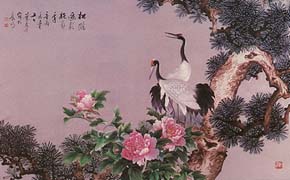
Four Famous Embroideries of China
Introduction
The Four Famous Embroideries of China, also known as Sida Mingxiu, are a celebrated collection of embroidery traditions that have been developed in different regions of China over several centuries. These include Xiang embroidery from Hunan province, Shu embroidery from Sichuan province, Yue embroidery from Guangdong province, and Su embroidery from Jiangsu province. Each of these embroidery styles is renowned for its unique characteristics, historical significance, and contributions to the art of embroidery.
Xiang Embroidery
Xiang embroidery, originating from Hunan province, is distinguished by its long history, exquisite craftsmanship, and distinct style. The earliest known piece of Xiang embroidery was discovered in the No 1 Tomb of Mawangdui in Changsha, dating back to the Han Dynasty (206 BC-AD 220). This discovery illustrates that the basic techniques used in Xiang embroidery have been practiced for centuries. As the craft evolved, Xiang embroidery absorbed elements of traditional Chinese paintings, which enriched its artistic style.
During the late Qing Dynasty (1644-1911) and the early Republic of China (early 20th century), Xiang embroidery reached its zenith, even surpassing Su embroidery in popularity. Following the establishment of the People's Republic of China, Xiang embroidery underwent further refinement and innovation, reaching new artistic heights. It primarily employs materials such as pure silk, hard satin, soft satin, and nylon, woven with colorful silk threads. This embroidery is celebrated for its high artistic value, producing both valuable artworks and items for everyday use.
Shu Embroidery
Shu embroidery, also known as Chuan embroidery, is the predominant embroidery style from Chengdu and surrounding areas in Sichuan province. It boasts a long history, with its prominence dating back to the Han Dynasty, when a government office was established to manage it. The Shu embroidery industry flourished during the Five Dynasties and Ten States periods (907-960), benefiting from social stability and high demand. Its peak development occurred during the Song Dynasty (960-1279), when it led in both production and quality.
Shu embroidery is characterized by its smooth, bright, and neat appearance, influenced by the geographical environment and local culture of Sichuan. The designs often feature themes such as flowers, leaves, animals, mountains, rivers, and human figures. The craft involves 122 techniques across 12 categories, exemplifying a fusion of fine arts, aesthetics, and practical application. Shu embroidery is commonly used for decorative and functional items, including quilt facings, pillowcases, clothing, and screen covers.
Yue Embroidery
Yue embroidery, also known as Guang embroidery, encompasses the embroidery traditions of Guangzhou, Shantou, Zhongshan, Fanyu, and Shunde regions in Guangdong province. Its origins trace back to the Tang Dynasty (618-907), when a girl named Lu Meiniang famously embroidered the seventh volume of the Fahua Buddhist Scripture onto a piece of silk. The craft gained further prominence during the Song Dynasty as a result of Guangzhou Port's prosperity, which facilitated its exportation.
During the Qing Dynasty, Yue embroidery saw significant advancements, with craftsmen innovating by using animal hair as a raw material to create more vivid pieces. The craft's unique characteristics are influenced by national folk art and include strong, contrasting colors and neat designs. The themes often feature dragons, phoenixes, flowers, and birds. Yue embroidery employs various techniques, including floss, thread, and gold-and-silk thread embroidery, to produce garments, hall decorations, and everyday items.
Su Embroidery
Su embroidery, representing the regions around Suzhou in Jiangsu province, is one of the oldest embroidery traditions in China. Emerging during the Three Kingdoms Period (220-280), it became a significant industry in Suzhou during the Ming Dynasty (1368-1644). Known for its smoothness and delicacy, Su embroidery earned Suzhou the title of "City of Embroidery" during the Qing Dynasty.
Throughout the mid and late Qing Dynasty, Su embroidery continued to evolve, introducing double-sided embroidery techniques. In 1950, the establishment of government-supported research centers and training programs further advanced Su embroidery. The craft's techniques emphasize flat surfaces, neat rims, thin needles, dense lines, harmonious colors, and even patterns.
Su embroidery pieces are categorized into costumes, hall decorations, and everyday items, combining decorative and practical values. Double-sided embroidery stands out as an exemplary representation of Su embroidery's sophistication and artistry.
Cultural Significance and Contemporary Relevance
The Four Famous Embroideries of China, through their rich histories and cultural significance, offer a glimpse into the diverse artistic heritage of the nation. Each style exemplifies the ingenuity and craftsmanship of its region, embodying the aesthetic values and cultural narratives of their respective areas.
Today, these embroidery traditions continue to thrive, adapting to contemporary artistic expressions and cultural practices. They are not only cherished for their historical and artistic value but also celebrated for their role in promoting cultural identity and sustaining traditional crafts.








